






Why Industrial & Trading E-commerce Is Different

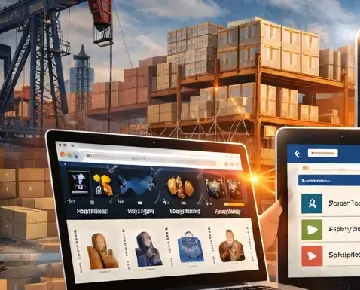
Industrial and construction e-commerce platforms are fundamentally different from consumer retail. They must handle massive product catalogs with complex technical specifications, support procurement workflows for B2B buyers, manage country-specific pricing and availability, and integrate seamlessly with ERP systems for accurate inventory and order management.

Unlike standard e-commerce stores, industrial platforms require advanced filtering systems to help engineers and procurement teams find products by technical attributes. They need product comparison tools for spec-based decision making. They must support bulk ordering, customer-specific pricing, and quote workflows. Most importantly, they need real-time ERP synchronization to prevent overselling and maintain accurate stock levels across thousands of SKUs.

Our industrial e-commerce solutions are built specifically for these requirements. We understand that a procurement manager needs to compare 10 power tools by voltage, torque, and certification standards—not just browse by brand. We know that inventory accuracy matters more than product recommendations. We recognize that B2B workflows require different UX patterns than B2C shopping.

Architektur der E-Commerce-Plattform für Apotheken
>

Challenges Faced by Industrial Trading Businesses

Real operational challenges that impact industrial e-commerce success

Managing 10,000–50,000+ SKUs

Large product catalogs overwhelm standard e-commerce platforms. Performance degrades, filtering becomes inadequate, and product discovery becomes impossible. Standard Shopify themes cannot handle catalogs of this scale without custom optimization and architecture.

Poor Filtering & Product Discovery

Standard e-commerce filters are insufficient for industrial products. Buyers need to filter by technical specifications, certifications, voltage ratings, material types, and usage applications. Without advanced attribute-based filtering, customers cannot find the right products efficiently.

ERP & Shopify Disconnect

Your Shopify store operates independently from your ERP system. Stock levels, pricing, and product data are not synchronized, leading to overselling, pricing errors, and inventory chaos. Manual data entry creates delays and errors that impact customer trust.

B2B Pricing Complexity

Different customers require different pricing based on volume, contracts, and relationships. Standard Shopify cannot handle customer-specific pricing, MOQ requirements, or bulk discount tiers without extensive customization. B2B buyers expect quote workflows, not standard checkout.

Slow Procurement Experience

Industrial buyers need to compare products by technical specifications, not just browse visually. They require tabular views for procurement workflows, side-by-side comparison tools, and detailed specification sheets. Standard product pages are designed for consumers, not procurement teams.

Multi-Country Catalog Management

Managing country-specific pricing, availability, and product catalogs across multiple markets is complex. Standard setups require duplicate stores or manual configuration. Without proper multi-market architecture, international expansion becomes operationally unmanageable.

Our Experience with Large-Scale Industrial Stores

We have built and deployed industrial e-commerce platforms handling 30,000+ products on Shopify. Our experience spans high-SKU environments with complex attributes, real-time ERP integrations, B2B workflows, and multi-country operations across the Middle East region.

Lieferung-Last-Mile-Management

30,000+ Product Catalogs

We have successfully built Shopify stores managing 35,000+ products with complex attributes, specifications, and variants. Our platforms maintain fast load times, efficient filtering, and smooth navigation even with massive catalogs through custom optimization and architecture.

Lieferung-Last-Mile-Management

Shopify Beyond Themes & Apps

We build custom Shopify apps and advanced functionality beyond standard themes. Our solutions include custom product content management, advanced filtering systems, product comparison tools, and B2B features that require deep Shopify platform expertise.

Lieferung-Last-Mile-Management

Odoo ERP Integration

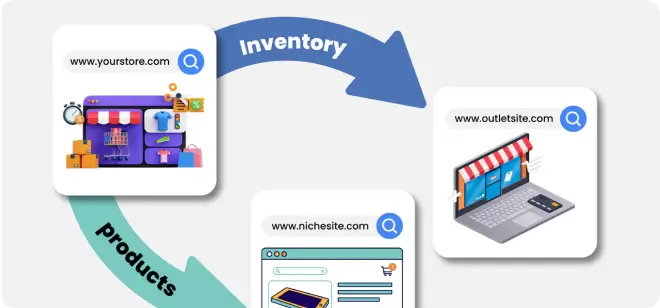
We integrate Shopify with Odoo ERP systems for real-time inventory synchronization, centralized product management, and automated order processing. Our integration architecture ensures accurate stock levels, pricing, and product data across all channels.

ERP-gesteuertes-Inventory-Management

Multi-Country Operations

Our platforms use Shopify Markets for multi-country selling with country-specific pricing, catalogs, and availability. We have experience scaling industrial stores across UAE, Saudi Arabia, Qatar, and other Middle East markets with proper localization and compliance.

Ready To Transform Your E-Commerce Business?

Let's discuss your project and create a custom solution that drives growth and success for your business.

Design, Develop, and Grow Your Store With Expert Support.

Transform Your E-Commerce Vision Into a Powerful, High-Converting Online Experience With the Support of Certified Shopify Experts, Creative UI/UX Designers, and Growth-Focused Digital Strategists Focused on Crafting Seamless User Experiences and Driving Sustainable Business Growth.

Gestalten-Sie-Ihren-Shop-Mit-Expertenunterstützung-Entwickeln-und-Wachsen

Industrial E-commerce Platform Architecture

Our industrial e-commerce platforms are built as integrated systems, not standalone stores. Every component is designed to handle scale, complexity, and B2B requirements.

  • Storefront UX: Mobile-optimized interface designed for both B2B procurement workflows and B2C browsing, with advanced filtering, product comparison, and multiple view options
  • Product & Collection Management: Custom Shopify apps for enhanced product specifications, structured technical data, and A+ style content for industrial buyers
  • Custom Shopify Apps: Purpose-built applications for advanced filtering, product comparison, B2B pricing, and custom content management beyond standard Shopify capabilities
  • ERP Integration Layer: Real-time synchronization with Odoo ERP for inventory, pricing, product data, and order management across all channels
  • Multi-Market Infrastructure: Shopify Markets configuration for country-wise pricing, catalogs, and availability with scalable international expansion

Advanced Product Discovery & Catalog Management

Industrial buyers need sophisticated tools to navigate large catalogs and find products by technical specifications. Our platforms include advanced discovery features designed for procurement workflows.

  • 8–10 Filter Collections: Each product collection includes 8–10 unique filters based on technical attributes, brand, usage, certifications, and standards. Buyers can filter power tools by voltage, torque, certification standards, and application type—not just by price or brand.
  • Attribute-Based Navigation: Products are organized and filterable by technical specifications, material types, usage applications, and industry standards. This enables engineers and procurement teams to find exactly what they need based on technical requirements.
  • Grid vs Tabular View: Customers can switch between visual grid view for browsing and tabular view for procurement workflows. Tabular view displays products in spreadsheet-like format with key specifications visible, making it easier for B2B buyers to compare and select products.
  • Product Comparison Tools: Side-by-side technical comparison allows buyers to compare multiple products by specifications, pricing, and availability. Built specifically for engineers and procurement teams who need to make spec-based decisions.

B2B & Wholesale Capabilities

Enterprise-grade B2B features for industrial trading businesses

Customer-Specific Pricing

Different customers see different pricing based on their account tier, volume agreements, and contract terms. B2B buyers access negotiated pricing automatically when logged in, while retail customers see standard pricing. Pricing rules are managed through custom Shopify apps integrated with ERP systems.

MOQ & Bulk Ordering

Minimum order quantities and bulk discount tiers are enforced automatically. B2B customers can place large quantity orders with volume-based pricing, while the system prevents orders below MOQ thresholds. Bulk ordering workflows support procurement teams placing orders for multiple projects or locations.

RFQ & Quote Workflows

B2B buyers can request quotes for custom configurations, large orders, or special pricing. Quote requests are routed to sales teams, who can generate custom quotes with negotiated pricing. Approved quotes convert to orders with pre-approved pricing and terms, streamlining the procurement process.

Role-Based Access

Different user roles have different access levels and capabilities. Buyers can browse and place orders, managers can approve purchases and access reporting, and admins have full account management. Role-based access ensures appropriate permissions and workflow controls for B2B operations.

Account-Based Selling

B2B accounts have dedicated dashboards showing order history, quotes, invoices, and account-specific pricing. Account managers can view customer activity, set custom pricing, and manage relationships. This account-centric approach supports relationship-based B2B selling rather than transactional e-commerce.

Custom Product Content Management

Custom Shopify apps enable enhanced product specifications, structured technical data, and A+ style content for industrial buyers. Product pages include detailed specification sheets, technical drawings, certification documents, and usage guides—content that standard Shopify cannot handle without customization.

Security, Compliance & Reliability

Pharmacy platforms handle sensitive health data and must meet strict security and compliance requirements. Our platforms are built with enterprise-grade security and regulatory compliance from day one.

  • Secure Prescription Uploads: Encrypted file storage, secure transmission, and access controls ensure prescription documents are protected throughout the system
  • Role-Based Access Control: Pharmacists, staff, and admins have appropriate access levels. Prescription data is only accessible to authorized personnel
  • Audit Trails: Complete logging of all prescription access, order modifications, and system changes for regulatory compliance and operational transparency
  • Scalable Infrastructure: Cloud-based architecture that scales automatically during traffic spikes, ensuring consistent performance during peak order periods
  • Data Backup & Recovery: Automated backups, disaster recovery protocols, and data redundancy ensure business continuity
  • Regional Compliance: Platforms configured to meet healthcare regulations in UAE, Qatar, Oman, and other Middle East markets

Leading pharmacy retail chains in Qatar and Oman

Native mobile applications for customers, delivery staff, and pharmacy operations

  • Allgemein-Technik
200+
Completed Projects
15+
Years Of Experience
100+
World Wide Clients
25+
E-commerce Experts

Why Choose Us

We are not a generic e-commerce agency that adapts retail solutions for pharmacies. We are specialists who understand pharmacy operations, regulatory requirements, and the technical complexity of building platforms that integrate with existing pharmacy management systems.

  • Pharmacy-Specific Expertise: Our team has deep experience building platforms for chain pharmacies, hospital-linked pharmacies, and healthcare delivery startups. We understand prescription workflows, inventory management, and delivery logistics specific to pharmacy operations.
  • Technical Depth: We build custom platforms, not template-based solutions. Our architecture handles real-time ERP integration, multi-location inventory routing, prescription management, and scalable delivery systems.
  • Operational Understanding: We know that stock accuracy matters more than product recommendations. We understand that prescription validation speed impacts customer satisfaction. We recognize that delivery routing affects operational costs.
  • Long-Term Partnership: Pharmacy platforms require ongoing support, updates, and optimization. We provide continuous maintenance, feature enhancements, and operational improvements as your business grows.

Engagement Models & Timelines

We deliver pharmacy e-commerce platforms through structured, phased approaches that minimize risk and ensure operational readiness.

  • Phase 1 - Discovery & Architecture (4-6 weeks): Requirements analysis, ERP integration assessment, prescription workflow design, and technical architecture planning
  • Phase 2 - Core Platform Development (12-16 weeks): Online storefront, prescription management, ERP integration, inventory sync, and admin dashboard
  • Phase 3 - Delivery & Mobile Apps (8-10 weeks): Delivery management system, customer mobile app, staff app, and delivery tracking
  • Phase 4 - Testing & Launch (4-6 weeks): Comprehensive testing, staff training, data migration, and phased go-live
  • Ongoing Support: 24/7 technical support, regular updates, feature enhancements, and performance optimization
  • Typical Timeline: 28-38 weeks from project start to full launch, depending on complexity, number of locations, and ERP integration requirements.

What Our Pharmacy Clients Say

Testimonials from leading pharmacy chains across the Middle East

Frequently Asked Questions

We integrate with pharmacy management systems through APIs, database connections, or file-based synchronization depending on your ERP capabilities. Our platforms maintain real-time stock sync, pricing updates, and product data synchronization to ensure accurate inventory across all channels.

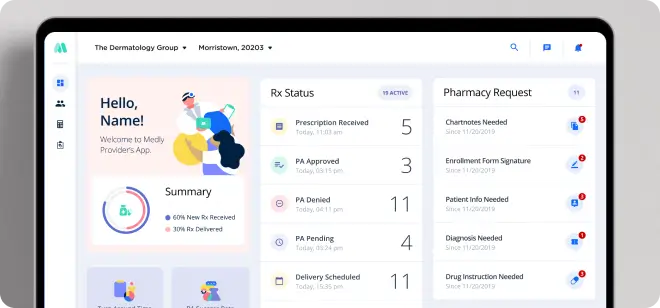
Yes. Our platforms include secure prescription upload systems, automated validation workflows, pharmacist review interfaces, and approval notification systems. Prescriptions are stored securely with proper access controls and audit trails for regulatory compliance.

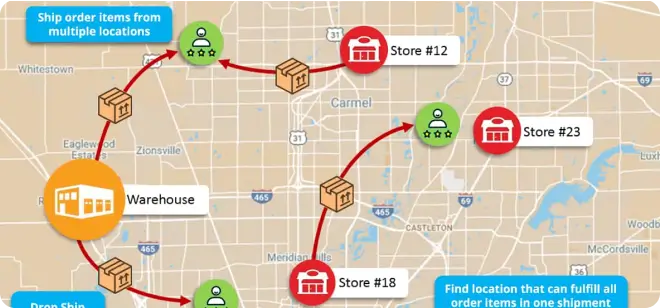
Our platforms automatically route orders to the nearest pharmacy location with available stock. Delivery management systems optimize routes, assign drivers, manage delivery slots, and provide real-time tracking. For chain pharmacies, this ensures efficient fulfillment across all locations.

We implement encrypted file storage, secure transmission protocols, role-based access controls, and complete audit trails. Prescription data is only accessible to authorized pharmacy staff, and all access is logged for compliance purposes.

Yes. We develop native iOS and Android apps for customers to browse, order, and track deliveries. We also build staff and delivery apps for order management, status updates, and delivery confirmation. All apps integrate seamlessly with the core platform.

Typical timelines range from 28-38 weeks from project start to full launch, depending on complexity, number of locations, ERP integration requirements, and mobile app development scope. We deliver in phases to ensure early value and operational readiness.

We provide 24/7 technical support, regular platform updates, feature enhancements, performance optimization, and staff training. Pharmacy platforms require continuous maintenance and improvement as operations scale and requirements evolve.